The Journal · Occasion
The modern wedding guest: a tailoring field guide
A wedding invitation is a small brief. Read it closely, take account of the season and the setting, and you can dress with real pleasure without ever competing with the people the day belongs to.
7 min read
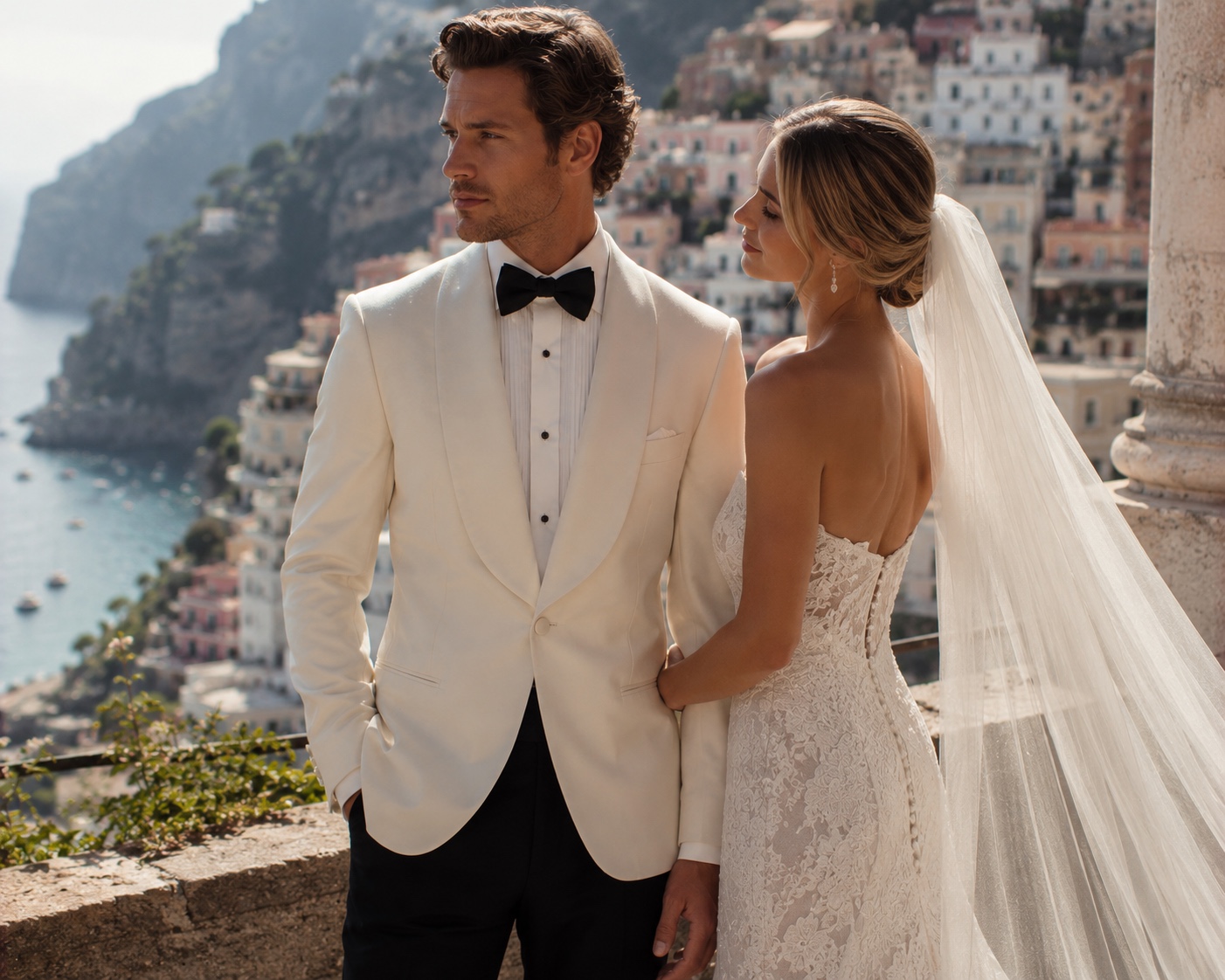
Few occasions ask so much of a suit in a single day. A wedding can begin in a cool church, move to a garden in full sun, continue through a long dinner and end on a dance floor after midnight. You will be photographed throughout, you will meet people you have not seen for years, and you are expected to look as though you made an effort without looking as though you are trying to be noticed.
Dressing well for all of that is not difficult. It simply rewards a little thought in advance.
Start with the invitation
The dress code is the most important piece of information you have, and it is worth taking literally. The most common are:
- Morning dress. A traditional daytime code: a black or grey morning coat, usually single-breasted with peak lapels, grey or striped trousers, a waistcoat, a light shirt and a tie. If you do not own morning dress, it is usually hired.
- Lounge suit. In British usage this means a suit with a shirt and tie. It is the most common code for weddings and the one this guide mostly addresses.
- Black tie. Evening dress: a dinner suit, usually black or midnight navy, with a white dress shirt and a black bow tie.
- Smart casual, cocktail or festive. Looser codes that invite some interpretation, and still reward tailoring.
If the invitation gives no code, look at the venue, the time of the ceremony and the couple themselves. A church ceremony followed by a country-house reception will usually be more formal than a relaxed celebration in a restaurant. When in doubt, a well-cut suit and a tie is the safe and courteous choice. It is always easier to remove a tie than to find one.
Do not compete with the wedding party
The oldest rule of wedding dress is also the kindest. The day belongs to the couple, and to a lesser extent to the families and the wedding party. A guest should look their best without looking like part of the group at the altar.
In practice that means avoiding anything that could be mistaken for the wedding party's outfits, where you know them, and resisting the temptation to wear the most dramatic suit you own. Ivory, cream and pale stone suits deserve particular care: in some settings they are exactly right for a guest, but they are also colours grooms increasingly choose, especially abroad. If you are unsure, choose something else. Morning dress is a special case: at a traditional wedding where the code asks for it, guests wear it too.
It is always easier to remove a tie than to find one.
Season, setting and time of day
Once you know the level of formality, the practical questions follow. When is it, where is it, and how long will you be wearing the suit?
A winter wedding in a stone church asks for a suit with some warmth. A mid-weight worsted is comfortable indoors, and a flannel suits a countryside celebration well. Darker, richer colours feel right in the colder months.
A summer wedding, particularly outdoors, is a different problem. You may be standing in sun for photographs and then sitting through a long dinner in a marquee. Choose a lighter cloth with good breathability, an open weave or a high-twist yarn that recovers from creasing, and consider a softer, less structured jacket. Lighter colours are welcome in daylight, and a mid or light grey, a soft blue or a muted green can look fresher than a dark city suit.
Time matters as much as season. Daytime weddings allow a little more colour and texture. Evening celebrations call for darker suits and cloths with a quiet richness, which will hold their own when the lights go down.
Colour and cloth
Navy is the most reliable colour a wedding guest can wear. It flatters most complexions, photographs well, works in every season and pairs with almost any shirt and tie. Mid-grey is a close second, and slightly softer. Charcoal is elegant for later ceremonies and winter weddings but can look severe on a bright summer afternoon.
Black is best kept for black tie, where a dinner suit is expected, and for evening dress codes. As an ordinary lounge suit at a daytime wedding it tends to look funereal. Brighter colours and bold patterns can work at relaxed or fashionable weddings, but they are harder to get right and much less useful afterwards.
In cloth, the most practical choice for most weddings is a smooth or subtly textured wool that will survive a long day and travel without fuss. A cloth with a faint sheen can look lovely in the evening, but avoid anything so lustrous that it catches every camera flash.
Shirt, tie, shoes and accessories
A white or pale blue shirt is always right. Double cuffs add a sense of occasion if you enjoy cufflinks, but a well-made button cuff is perfectly correct with a lounge suit. Make sure the collar holds its shape under a jacket; a soft collar that collapses by the speeches will undo a good suit.
A wedding is one of the best occasions for a tie with some personality. Silk grenadine, a subtle pattern or a colour that picks up the season will all look considered. Keep a pocket square complementary rather than matching, and fold it simply.
Dark brown or black leather shoes suit most weddings, with black the more formal. Oxfords are the safest choice; loafers can work at relaxed summer celebrations. Whatever you choose, make sure they are comfortable enough to stand in for hours and to dance in later. A slim watch, a belt that matches your shoes or braces if your trousers are cut for them, and restraint with anything else.
When the invitation says black tie
Black tie simplifies decisions rather than complicating them. The dinner suit is black or midnight navy, with a jacket that has peak or shawl lapels, usually faced in satin or grosgrain, and trousers with a matching braid down the outside seam. The shirt is white, often with a pleated or marcella front, and the bow tie is black. Braces rather than a belt, black patent or highly polished black shoes, and very little else.
The one real choice is between a self-tied and a pre-tied bow tie. A self-tied tie has a slight irregularity that looks more natural, and learning to tie one takes an evening of practice. Summer weddings in hot climates sometimes allow an ivory dinner jacket; follow the invitation and the hosts rather than assuming.
Jackets, customs and courtesy
At many receptions guests wait for a cue before removing their jackets, often when the wedding party does so or when the hosts suggest it on a hot day. It is a small courtesy, but people notice it. When the jacket does come off, a well-fitting shirt and trousers held up properly will keep you looking composed.
Religious and cultural ceremonies may have their own expectations: covered heads, covered shoulders, shoes removed at the door, or particular colours to avoid. If you are unfamiliar with the traditions of the families involved, ask. Couples are almost always pleased to be asked, and it is far better than guessing on the day.
Destination and outdoor weddings
Weddings abroad and outdoors bring their own challenges: heat, humidity, uneven ground and luggage.
- Choose cloth for the climate, not for the photograph. A light, breathable wool or a wool blend with an open weave will look better at five in the afternoon than a heavier suit that looked perfect in the morning.
- Pack the suit carefully and hang it as soon as you arrive. A steamy bathroom will release most travel creases.
- Expect to take the jacket off at some point, and choose a shirt and trousers that still look composed without it.
- Consider the ground. Grass, sand and gravel are unkind to fine leather soles.
- Respect local customs and the couple's wishes. A beach wedding still deserves care, even if the tie stays at home.
Wearing it again
There is a strong case for choosing a wedding suit you will be glad to wear afterwards. A suit bought for a single occasion and then forgotten is a poor use of money and good cloth. A suit chosen with the rest of your year in mind is one you will come to associate with a happy day.
Navy or mid-grey in a versatile, mid-weight wool will move easily from a wedding to the office, to dinners and to the next invitation. Keep the most occasion-specific elements in the shirt, the tie and the pocket square, where they are easy to change. If you attend several weddings each summer, a lighter suit in a soft blue or grey can become a welcome part of a warm-weather wardrobe.
The best wedding guests are remembered for being good company, not for their clothes. Dress with care, respect the day, and the suit will do exactly what it should.