The Journal · Cloth
Super 110s to 150s: what the numbers actually mean
A Super number tells you one precise thing about a cloth, and it is not how good the suit will be. Here is what the label measures, what it leaves out, and why the finer option is not always the wiser one.
5 min read
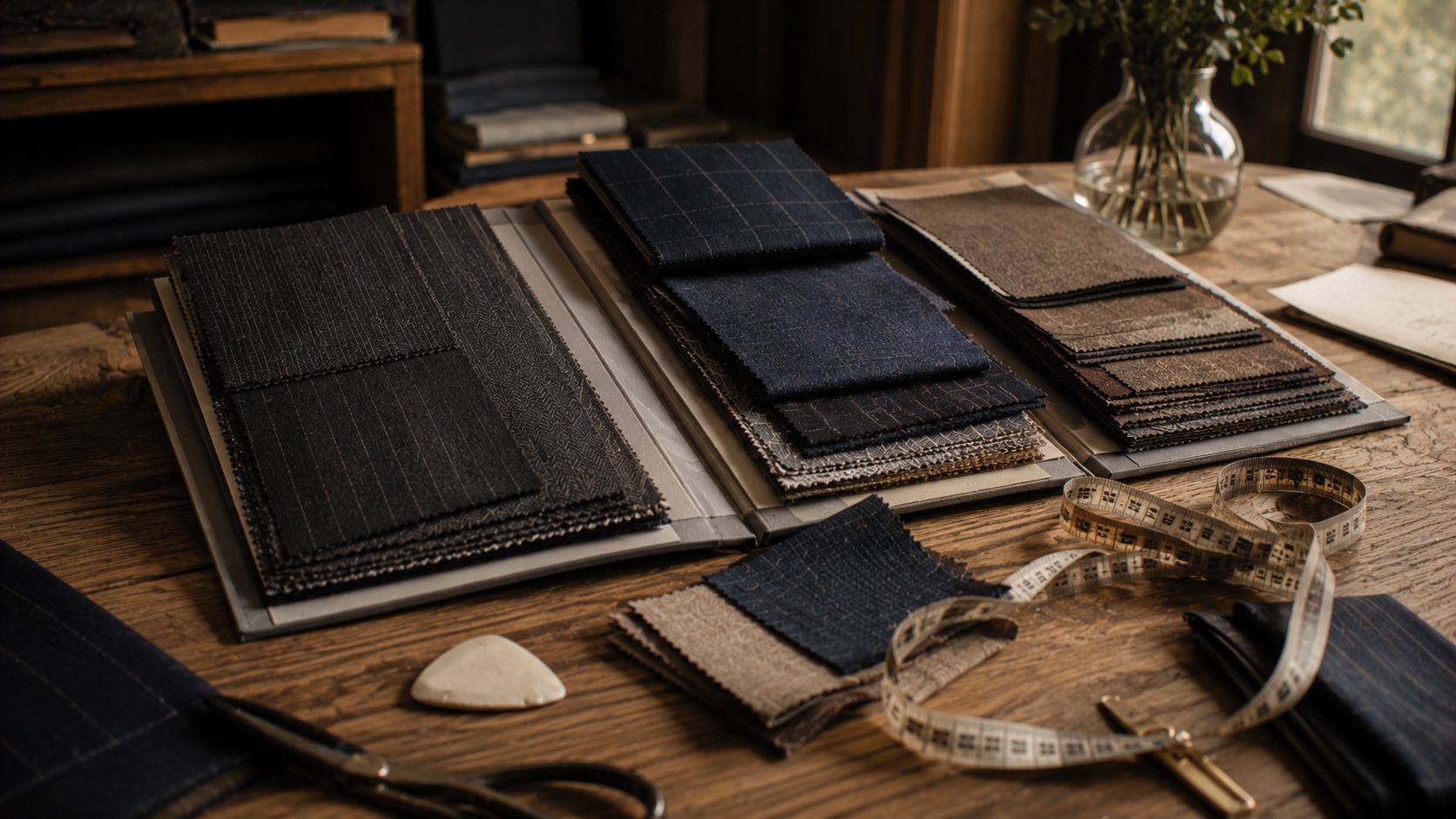
A measurement, not a grade
Look inside a length of fine suiting and you will often find a number: Super 110s, Super 130s, occasionally Super 180s or beyond. It is tempting to read it like a star rating, with each step up promising a better suit. It is more useful to read it as what it actually is, which is a measurement of how fine the wool fibres are.
The scale is set out in the Fabric Labelling Code of Practice of the International Wool Textile Organisation, and the same values appear in United States labelling rules. Each Super number corresponds to a maximum average fibre diameter, measured in microns, or thousandths of a millimetre. Super 110s means the fibres average 18.25 microns or finer. Super 120s is 17.75, Super 130s is 17.25, Super 140s is 16.75 and Super 150s is 16.25. Every step of ten on the scale is half a micron finer.
Under the code, the word Super is reserved for cloth made from pure new wool, although small additions of rare fibres such as cashmere or mohair, silk, a little elastane or a touch of decorative yarn are permitted. A wool blend with at least 45 per cent wool may carry the number, but not the word.
Where the numbers came from
The figures have their roots in the worsted trade of Yorkshire. A spinner's count once described how many 560-yard hanks of yarn could be spun from a pound of combed wool. Finer wool could be spun further, so it earned a higher count. Over time the industry replaced that indirect measure with a direct one, and the fibre itself is now measured, with the code naming a projection microscope as its test method. The old numbers survived as names.
What finer fibre gives you
Finer fibres are more flexible. They bend rather than prickle against the skin, and they pack more closely when spun, which allows a smoother yarn and a cloth with a softer, more fluid handle. A good Super 150s has a surface that feels almost cool to the touch and drapes in long, liquid folds. Finer yarn can also be woven into lighter cloth without becoming coarse, which is part of why very fine suitings are prized for warm weather and for occasions where a suit should feel like nothing at all.
There is often a visual difference too. Fine worsteds can carry a gentle lustre, particularly in darker colours, that reads as quietly luxurious in evening light.
What it costs you
The qualities that make fine fibre pleasant are the same ones that make it delicate. A thinner, more flexible fibre has less resistance to abrasion. The cloth it produces tends to be lighter and softer, which means it creases more readily, can lose its press sooner and may begin to shine at the points of greatest wear: the seat of the trousers, the elbows, the edges of pockets. Very fine cloths can also be less forgiving to tailor, because they have less body to hold a shape.
The qualities that make fine fibre pleasant are the same ones that make it delicate.
None of this makes a high Super number a poor choice. It makes it a particular choice, best suited to a suit that is worn with some care and not every day.
Price follows fineness too. The finest wool is a small part of the clip, so cloth woven from it costs more. That can create an awkward bargain, in which paying more buys a softer suit that asks for more careful treatment. It is worth deciding in advance whether that is what you want.
What the number does not tell you
Because the Super number measures only fibre diameter, it is silent on almost everything else that determines how a cloth behaves:
- Weight. Two Super 120s cloths can differ considerably in weight, and weight has more to do with warmth and drape than fineness does.
- Twist. Yarn spun with a high twist is springier and recovers from creasing far better, whatever its fineness.
- Weave. A plain weave, a twill, an open hopsack and a flannel behave very differently, even from similar wool.
- Finishing. How a cloth is washed, pressed and set after weaving shapes its handle and its resilience.
- The wool itself. Fibre length, strength and consistency matter as much as the average diameter.
This is why an experienced cloth buyer will often reach for a lower Super number from a well-made cloth ahead of a higher number from an indifferent one.
Choosing for how you will wear it
The better question is not which number is highest, but what the suit has to do.
If it will be worn several times a week, through commutes, flights and long days at a desk, durability and recovery matter more than softness. A Super 110s or 120s in a sensible weight, or a high-twist cloth, will look sharper for longer and tolerate the rotation of a working wardrobe.
If it will be worn for occasions, dinners and the days when you want it to feel special, a finer cloth earns its place. A Super 130s or 150s will feel and drape beautifully, and a suit worn once or twice a month has time to rest between outings.
Climate plays a part as well. Fine, light cloth is comfortable in heat, but a warm, humid city is also where creasing is most visible, so an open weave or a high-twist yarn can be the more practical expression of lightness. In cold, damp weather a heavier cloth, perhaps a flannel, will usually outperform a fine worsted, whatever the label says.
Many people who wear suits often settle, over time, somewhere between Super 110s and 130s for their working wardrobe, and keep the finer numbers for suits that are worn less frequently. It is not a rule, simply a pattern that reflects how the trade-off plays out in daily life.
The smarter choice is sometimes the lower one
A suit is not better because its fibres are thinner, any more than a watch is better because its case is lighter. Fineness is one quality among several, and it trades against others that many people value more over the years: resilience, structure and the ability to look composed at the end of a long day.
Read the number as a description rather than a verdict. Then choose the cloth that suits the life the suit is going to lead.