The Journal · Style
Notch, peak or shawl — choosing a lapel that suits you
The lapel is the first detail anyone reads on a jacket. Each of the three classic shapes carries its own history, its own level of formality and its own character.
4 min read
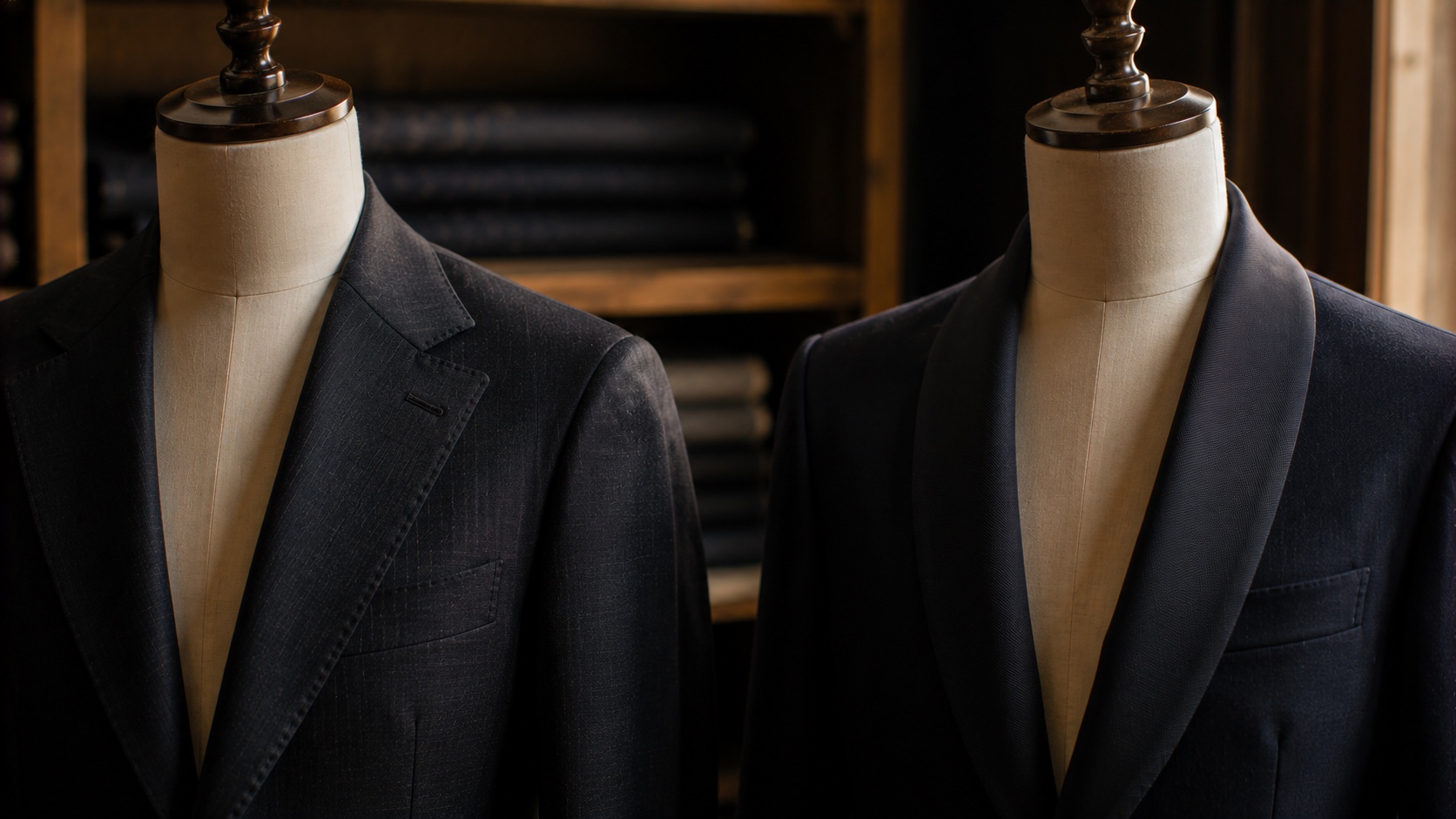
Stand across a room from someone in a tailored jacket and, before you register the cloth or the fit, you will have read the lapels. They frame the face, lead the eye towards the chest and set the tone of the whole garment. Change nothing but the lapel and a suit can move from the office to the evening, or from quietly conventional to unmistakably confident.
The notch: the everyday classic
The notch lapel is formed where the collar meets the lapel at an angle, leaving a small V-shaped step. It is the shape on most single-breasted suits and sports jackets, and it is the least formal of the three, which is precisely its strength. A notch lapel suits a business suit, a wedding in the daytime, a dinner with friends and a blazer worn with flannel trousers at the weekend. It never looks out of place.
Within the shape there is a good deal of range. Width changes the mood more than people expect. A slimmer notch reads as sharper and more contemporary; a moderate width, in proportion to the shoulders and the chest, tends to look balanced across the years. Where the notch sits matters too: a higher gorge, the seam where collar and lapel meet, gives a longer, more modern line.
The peak: formal and assertive
The peak lapel sweeps its lower edge upwards into a point that rises towards the shoulder. It descends from the formal coats of the nineteenth century, including the tailcoat and the morning coat, and it still carries that sense of occasion. Peak lapels are conventional on double-breasted jackets, where their width balances the broader front, and they are one of the two traditional choices for a dinner jacket.
On a single-breasted suit a peak lapel is more of a statement. It broadens the visual line of the shoulders and draws the eye upwards, which gives a confident, slightly dressier impression. Some people find that too emphatic for an ordinary working week. Others wear it precisely because it lifts an otherwise plain navy or charcoal suit.
Change nothing but the lapel and a suit can move from the office to the evening.
The shawl: an evening shape
The shawl lapel has no notch and no peak. Collar and lapel run together in one continuous, rounded curve. It comes from the Victorian smoking jacket, a garment for relaxing after dinner, and it passed from there to the earliest dinner jackets. That lineage explains its character: elegant, relaxed and firmly associated with evening dress.
Today a shawl collar belongs almost entirely to the dinner jacket, often faced in silk or satin, and to softer evening jackets in velvet. On a daytime business suit it would look like a costume. That is not a rule to break lightly, because the shape carries its evening associations wherever it goes.
The details around the shape
A lapel is more than its outline. On a well-made jacket it does not lie flat against the chest but rolls in a soft curve from the collar to the top button, a quality that depends on the construction underneath as much as on the pattern. A roll that runs to the second of three buttons, often called a three-roll-two, gives a longer, softer line and appears in several tailoring traditions, Neapolitan among them.
Many good jackets also carry a buttonhole in the left lapel. It descends from coats whose collars could be turned up and buttoned closed against the weather; today it holds a flower at a wedding, or simply sits there as a sign of a considered jacket. Whatever the shape, a lapel buttonhole is a small detail that rewards a closer look.
Formality at a glance
- Notch: the most versatile. Right for business, most daytime occasions and relaxed tailoring.
- Peak: dressier and more assertive. Traditional on double-breasted jackets and on dinner jackets, a confident choice on a single-breasted suit.
- Shawl: evening wear. Traditional on dinner jackets, rarely appropriate on a day suit.
For black tie specifically, peak and shawl are the traditional choices. Notch lapels on dinner jackets are common, but many people who care about evening dress regard them as the less correct option, because they borrow the language of the business suit.
Choosing for the life you lead
Much advice about lapels is framed around body shape, with rules about who may or may not wear a peak. Proportion does matter, but mostly in width rather than style. A lapel that is in scale with your shoulders and chest, neither pinched nor overwhelming, will look right on almost anyone. Choosing the shape is better approached through use and personality.
If this is your first suit and it has to cover work, weddings and everything between, a notch lapel of moderate width is the sound choice. If you already have that suit, or you want something that feels a little more deliberate, a peak lapel gives a single-breasted suit real presence and is a natural partner for a double-breasted one. And if you are commissioning a dinner jacket, choose between peak and shawl according to temperament: the peak is sharper and more architectural, the shawl softer and more romantic.
Ultimately the lapel is where a jacket speaks most clearly. Choose the shape that says what you want it to say, then keep its width in proportion, and it will not date.